.svg)

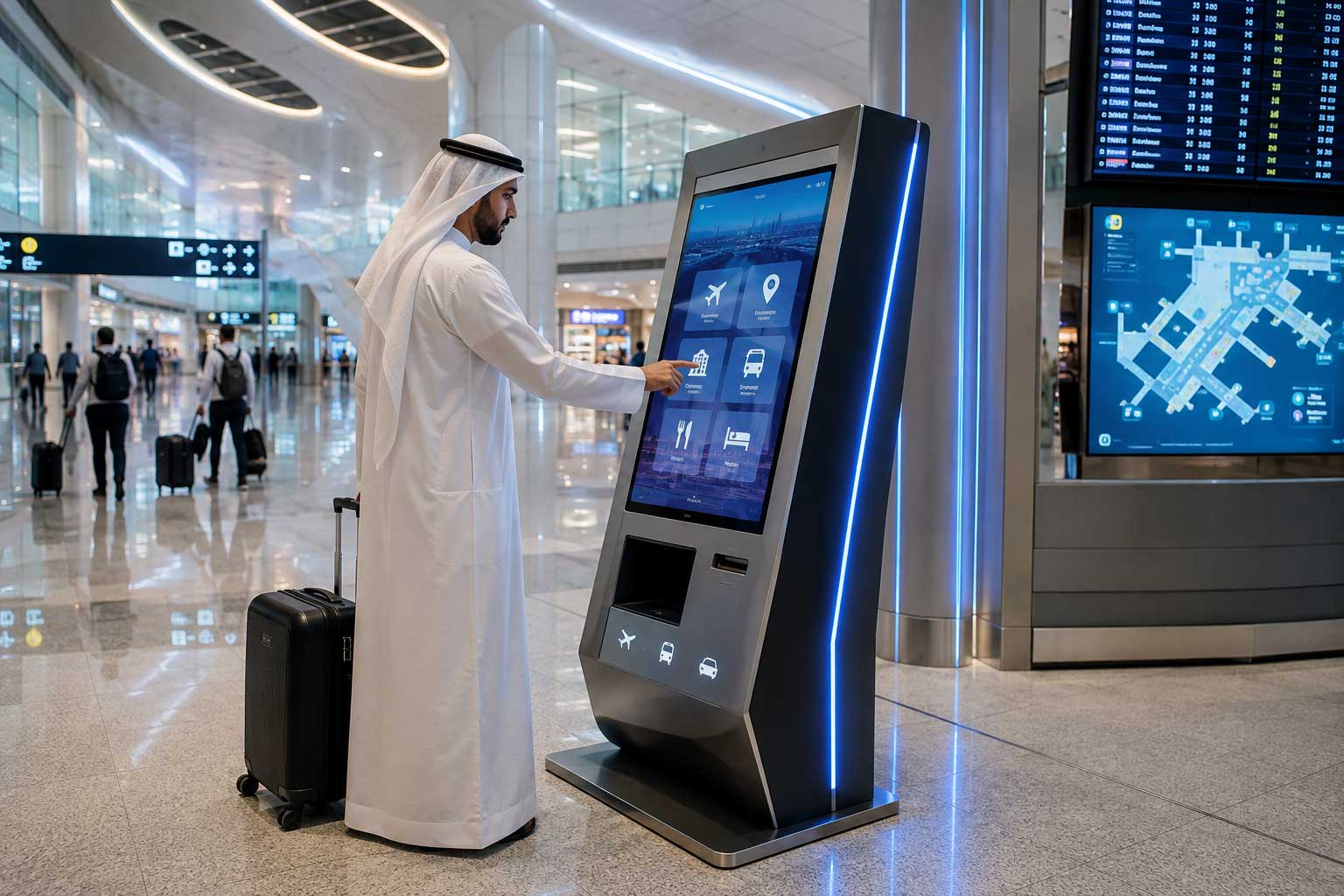
Airports and transport hubs are built to move thousands of people every day. Whether it's an international airport, metro station, bus terminal, ferry port, or railway station, passengers expect quick access to information and easy navigation through what can often be complex, unfamiliar spaces.
Interactive kiosks are helping transport operators meet those expectations. By providing self-service access to travel information, wayfinding, local services, and multilingual assistance, these digital solutions improve passenger experiences while taking pressure off staffed information counters. As the UAE continues investing in world-class transport infrastructure and smart city initiatives, the airport information kiosk is becoming a core part of modern passenger services.
Helping Passengers Find Their Way
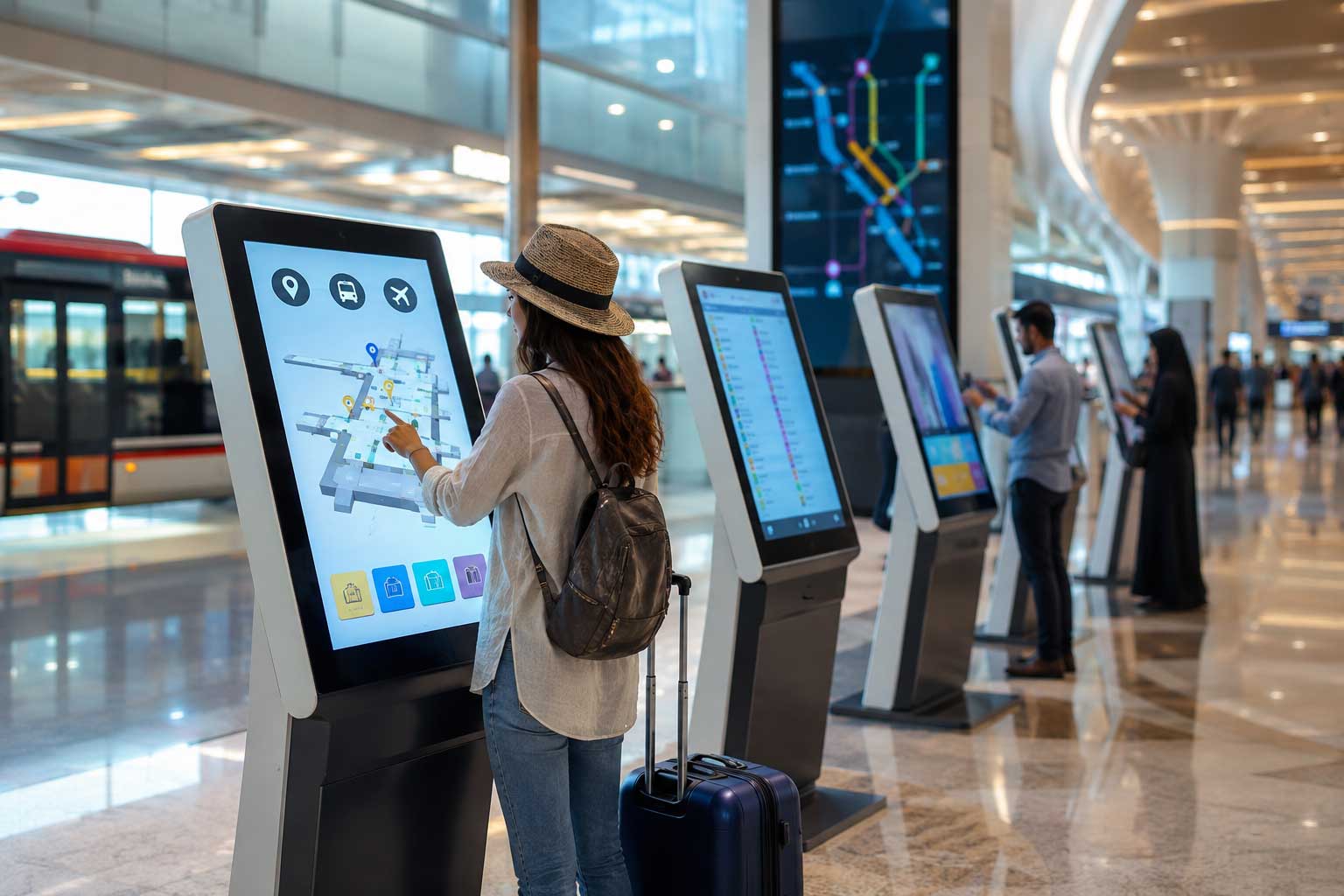
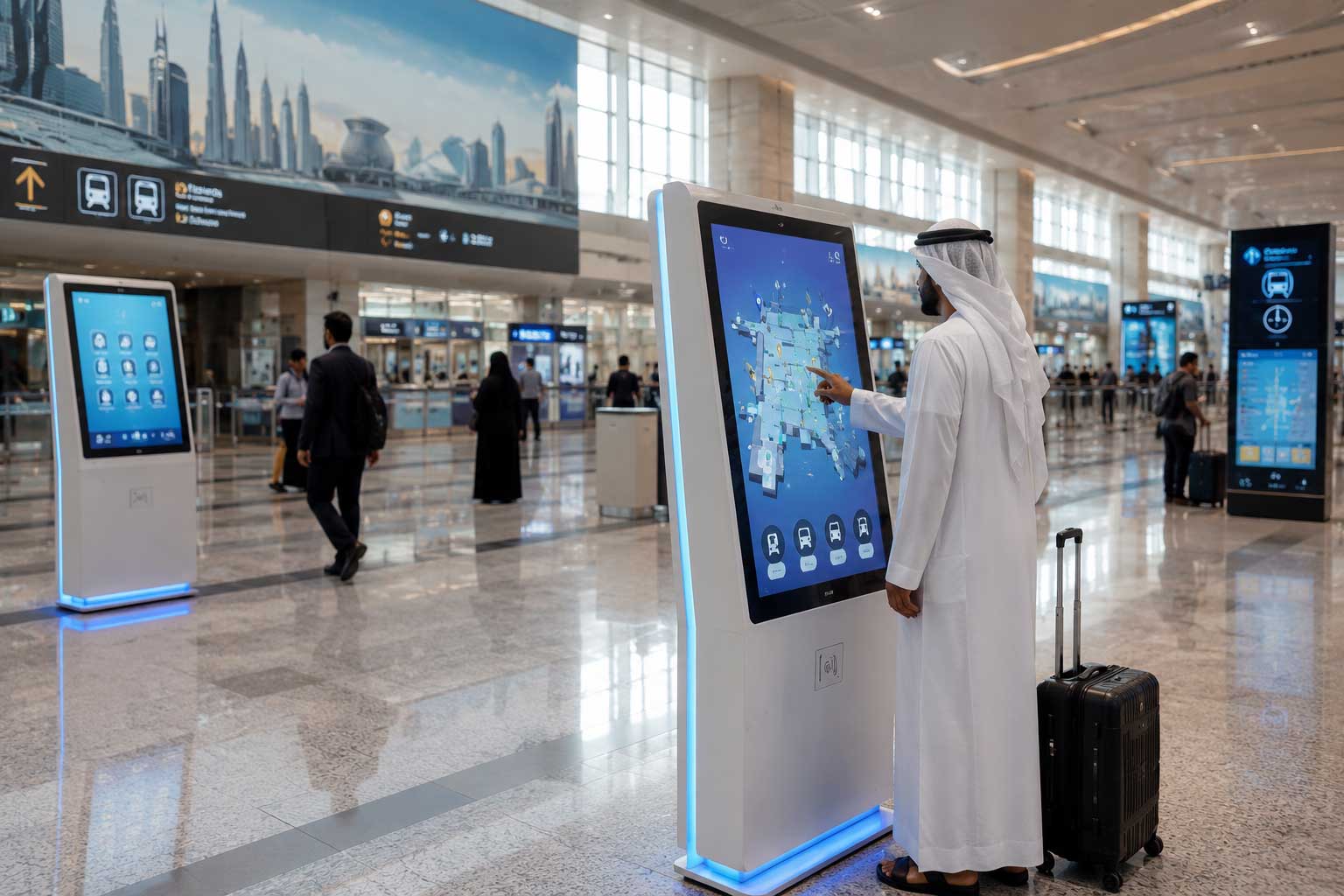
Large airports and transport terminals can be genuinely difficult to navigate, especially for first-time visitors. A digital wayfinding kiosk gives passengers a quick, intuitive way to get their bearings without hunting for a staff member or squinting at an overhead sign.
Through a clear touchscreen interface, passengers can locate:
- Departure and arrival gates
- Airline check-in counters
- Immigration and customs
- Baggage claim areas
- Boarding gates and lounges
- Restaurants, cafés, and retail outlets
- Prayer rooms
- Parking facilities
- Taxi and ride-hailing pickup points
Clear, on-demand directions reduce confusion and help passengers move through the terminal more efficiently.
Providing Real-Time Travel Information
Passengers often need updated information fast, and they don't always have time to queue at a desk to get it. A passenger information kiosk can display live data including:
- Flight schedules
- Gate changes and boarding times
- Delays and cancellations
- Public transport schedules
- Platform information
- Service announcements
Having this information available at a glance improves passenger confidence and reduces the volume of routine queries that staff have to handle.
Supporting International Travelers
The UAE welcomes millions of international visitors every year, and not all of them arrive speaking Arabic or English. An airport self-service kiosk with multilingual support helps bridge that gap immediately.
Beyond language, these kiosks can assist tourists with:
- City maps and tourist attractions
- Hotel recommendations
- Public transport guidance
- Emergency contact information
- Currency exchange locations
- Visa and travel information
These features make a practical difference from the moment a visitor arrives, setting a positive tone for the rest of their trip.
Enhancing Passenger Engagement
A transport information kiosk doesn't have to stop at basic information. Passengers can also use them to:
- Explore airport services and lounge locations
- Discover shopping and dining offers
- View restaurant promotions
- Access Wi-Fi instructions
- Download travel guides via QR code
- Participate in customer satisfaction surveys
These features create a more engaging experience for passengers and, at the same time, give operators useful insights into how people are actually using the terminal.
Creating New Advertising Opportunities
Airports and transport hubs attract large, diverse audiences throughout the day. That makes them genuinely valuable advertising locations, and interactive kiosks are well suited to take advantage of that.
Kiosks can showcase:
- Retail and duty-free promotions
- Hotel and tourism campaigns
- Event promotions and local attractions
- Transportation services
Unlike static advertising boards, digital campaigns can be updated instantly and scheduled according to passenger demographics, time of day, or seasonal travel patterns. That kind of flexibility is difficult to achieve with traditional signage.
Improving Operational Efficiency
Information counters tend to receive the same questions over and over again. Interactive kiosks reduce that workload by letting passengers independently access directions, service information, transport schedules, facility locations, and answers to frequently asked questions.
That frees up customer service teams to focus on passengers who genuinely need hands-on assistance, and it improves the overall flow of visitors through the terminal.
Applications Beyond Airports
The same technology that works in an airport translates well to other transport settings. Interactive kiosks in the UAE are already being considered or deployed in:
- Metro stations
- Railway stations
- Bus terminals
- Ferry terminals and cruise ports
- Integrated and multimodal transport hubs
- Smart city mobility centers
That flexibility makes them a scalable option for transport networks of all sizes.
Why Choose VirtuKiosk?
VirtuKiosk provides customizable interactive kiosk solutions for airports, transport authorities, metro stations, railway operators, and public mobility projects across the UAE. Whether you need digital wayfinding, passenger information, tourism guidance, or interactive advertising displays, VirtuKiosk is designed to improve passenger experiences while supporting efficient transport operations.
Available in a range of indoor and outdoor configurations, VirtuKiosk solutions can be tailored to meet the specific requirements of high-traffic transportation environments.
Frequently Asked Questions
Can airport kiosks display live travel information?
Yes. Subject to system integration, interactive kiosks can display real-time flight schedules, transport updates, and passenger announcements.
Can transport kiosks support multiple languages?
Absolutely. Multilingual interfaces make them well suited for serving international travelers and diverse communities.
Are interactive kiosks suitable for outdoor transport locations?
Yes. Weather-resistant kiosk models are available for outdoor installations, including transport terminals and public spaces.
Conclusion
Modern transportation is about more than moving people from point A to point B. It's about making that journey smooth, informed, and as stress-free as possible. Interactive kiosks help airports and transport operators deliver real-time information, simplify navigation, and improve access to essential services, all while reducing pressure on customer service teams.
Whether deployed in airports, metro stations, or multimodal transport hubs, VirtuKiosk provides scalable solutions that support smarter mobility and better passenger experiences across the UAE.