.svg)


What Are Digital Kiosks in Universities and Colleges?
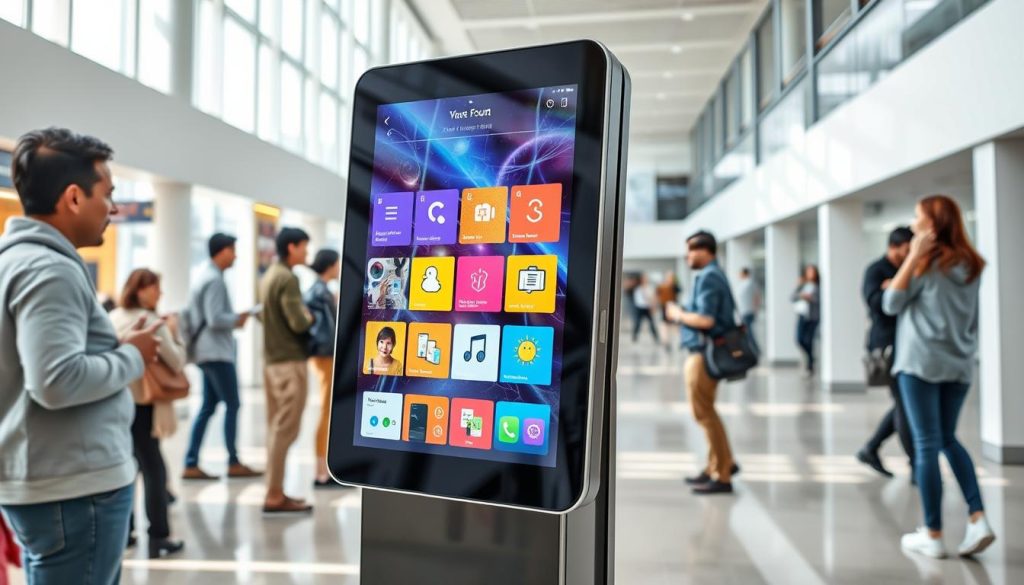
Digital kiosks in higher education are interactive touchscreen systems placed across campuses to support students, staff, and visitors with self-service access to information and services.
They act as digital touchpoints that reduce administrative load while improving the overall campus experience.
Why Universities and Colleges Are Adopting Digital Kiosks
Modern campuses are large, diverse, and highly dynamic. Students expect fast, digital-first services similar to what they experience in retail or banking.
Digital kiosks help institutions:
- Reduce queues at administrative offices
- Improve access to student services
- Support smart campus initiatives
- Deliver consistent information across campus
Key Use Cases of Digital Kiosks in Higher Education
Student Services & Self-Service Access
Kiosks allow students to access common services without visiting offices. This includes viewing announcements, requesting documents, checking schedules, or accessing campus resources.
By enabling self-service, institutions reduce repetitive administrative tasks and improve service speed.
Fee Payments & Financial Transactions
Digital kiosks support secure fee payments and financial interactions on campus. Students can complete transactions independently, reducing congestion at finance counters and improving payment efficiency.
Campus Wayfinding & Navigation
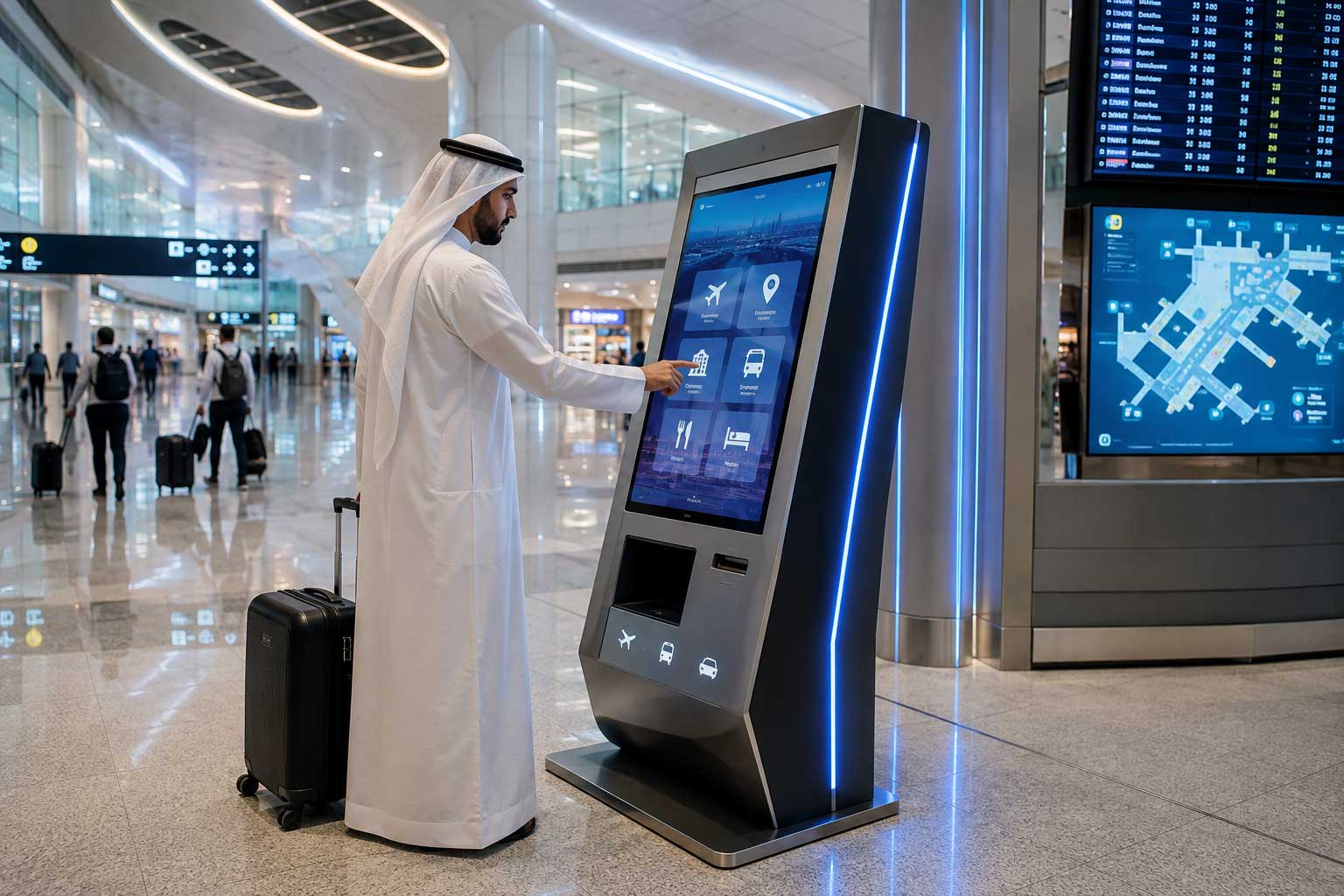
Large campuses can be difficult to navigate, especially for new students and visitors. Wayfinding kiosks help users quickly locate:
- Academic buildings
- Administrative offices
- Libraries and labs
- Event venues and facilities
This improves visitor experience and reduces dependence on staff for directions.
Event Support & Registrations
Universities frequently host academic events, orientations, conferences, and student activities. Kiosks simplify:
- Event check-ins
- Schedule viewing
- Venue directions
This ensures smoother event operations and better attendee experience.
Canteen & Service Area Support
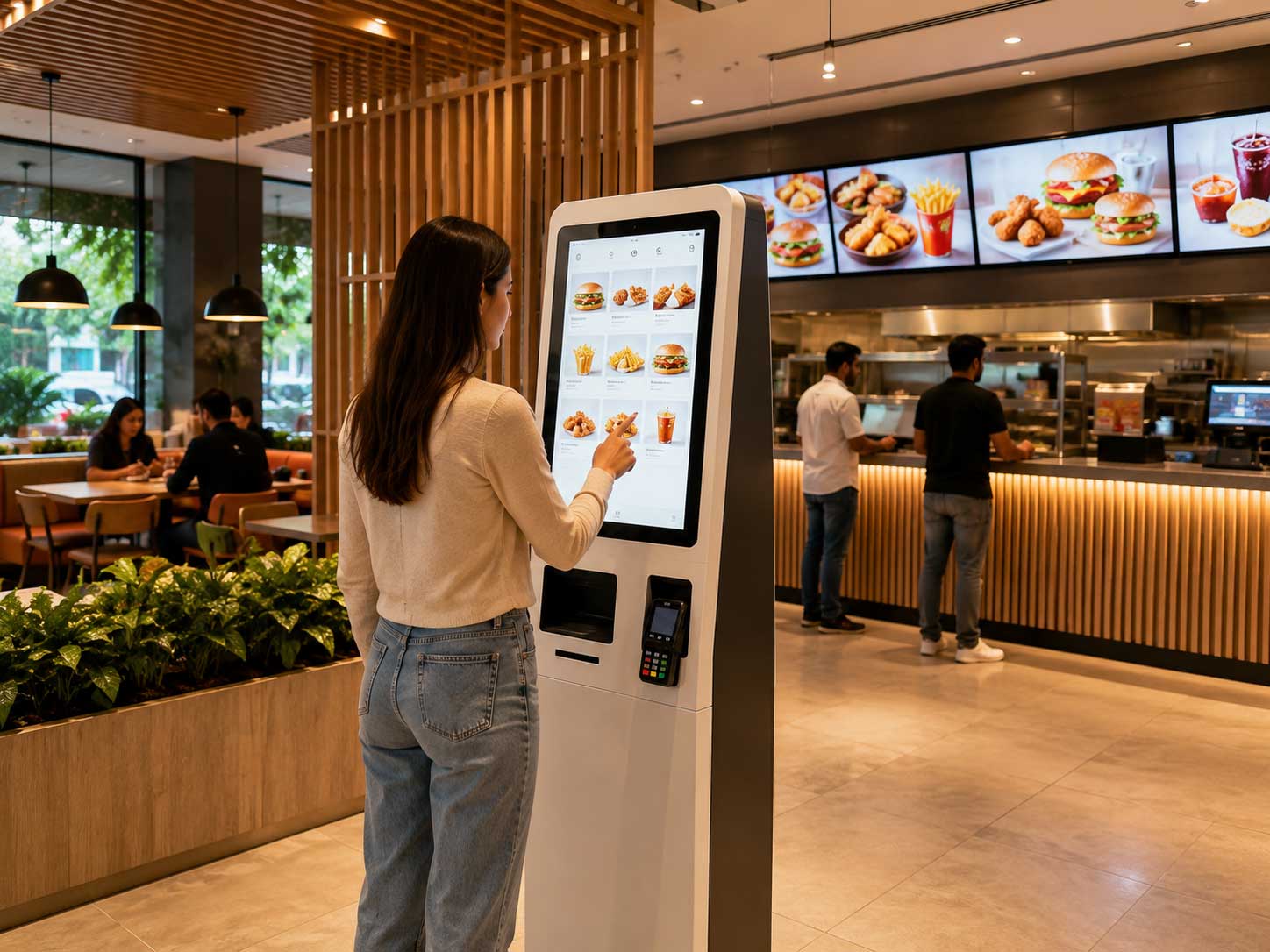
Kiosks placed in food courts or service areas help manage peak-time demand by enabling self-ordering, information display, or queue management — improving efficiency and student satisfaction.
Benefits for Educational Institutions
Universities and colleges benefit from digital kiosks by:
- Improving student experience
- Reducing administrative workload
- Supporting digital transformation goals
- Enhancing campus accessibility
- Presenting a modern, tech-enabled image
Integration with Campus Systems
Education kiosks can integrate with:
- Student information systems
- ERP and finance platforms
- Campus CMS tools
- Event management systems
This ensures accurate, real-time information across all touchpoints.
Future of Digital Kiosks in Higher Education
As campuses move toward smart infrastructure, kiosks will continue to evolve with:
- Personalized student experiences
- Mobile and QR-based handoffs
- Multilingual interfaces
- Touchless interactions
They are becoming a core part of connected campus ecosystems.
Conclusion
Digital kiosks are transforming universities and colleges into smarter, more efficient environments. By simplifying services, improving navigation, and supporting campus operations, kiosks play a key role in modern higher education.
For institutions looking to enhance student experience while reducing operational strain, digital kiosks offer a practical and scalable solution.
Castle IT Solutions delivers customized digital kiosk systems for universities and colleges — designed to support smart campuses and efficient student services.