.svg)

Introduction
Educational campuses are becoming miniature smart cities. From student registration to cafeteria orders, the push toward digital transformation is reshaping how students, faculty, and visitors interact with institutions.
One key driver of this transformation is the digital kiosk — a self-service system that makes campus operations faster, more connected, and more efficient.
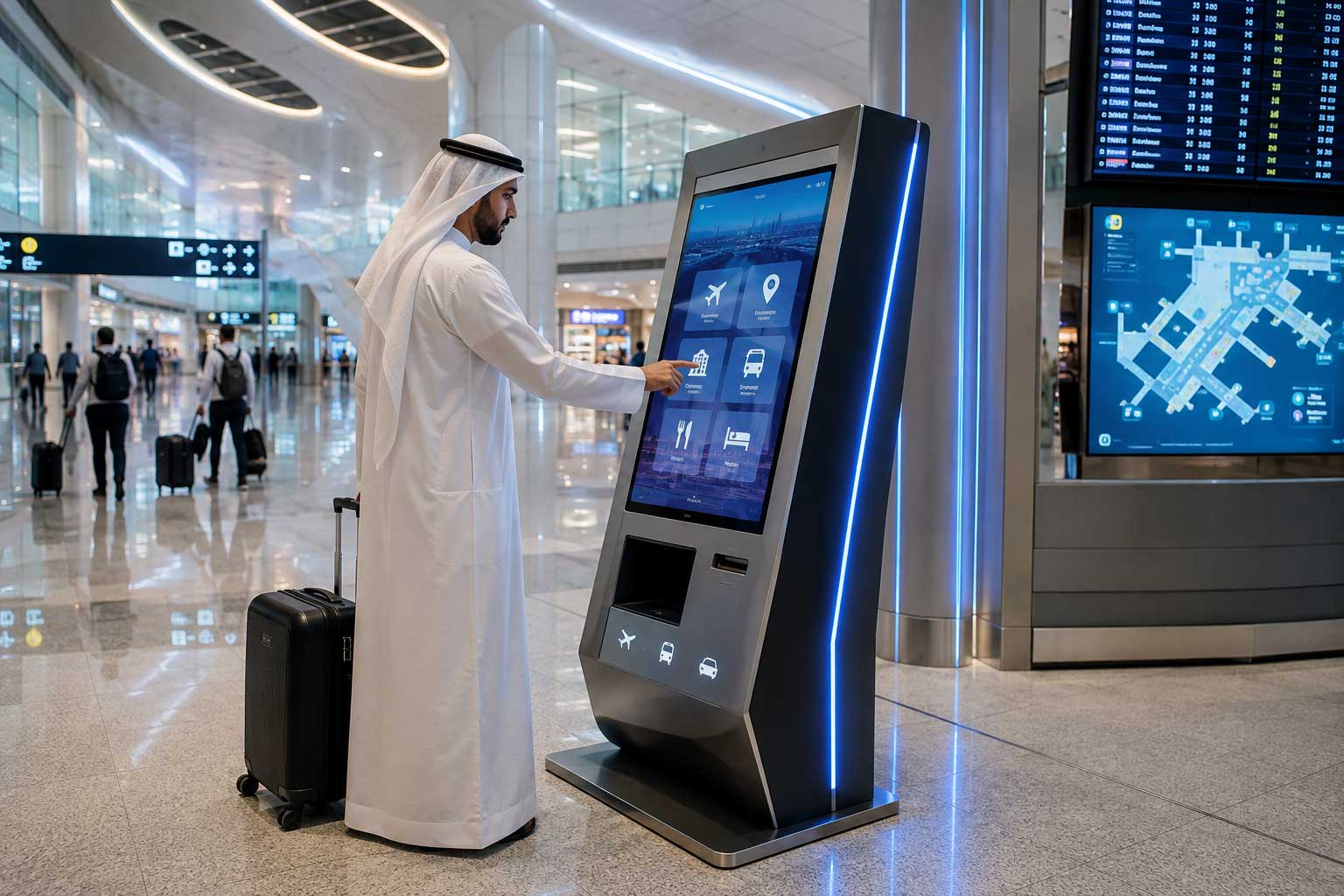
Across universities and schools in the UAE and beyond, kiosks are redefining the way campuses manage communication, payments, and services — offering convenience, accuracy, and a consistent digital experience.
What Are Digital Kiosks in Education?
A digital kiosk is an interactive touchscreen terminal that allows users to perform tasks such as information lookup, transactions, or registration without staff assistance.
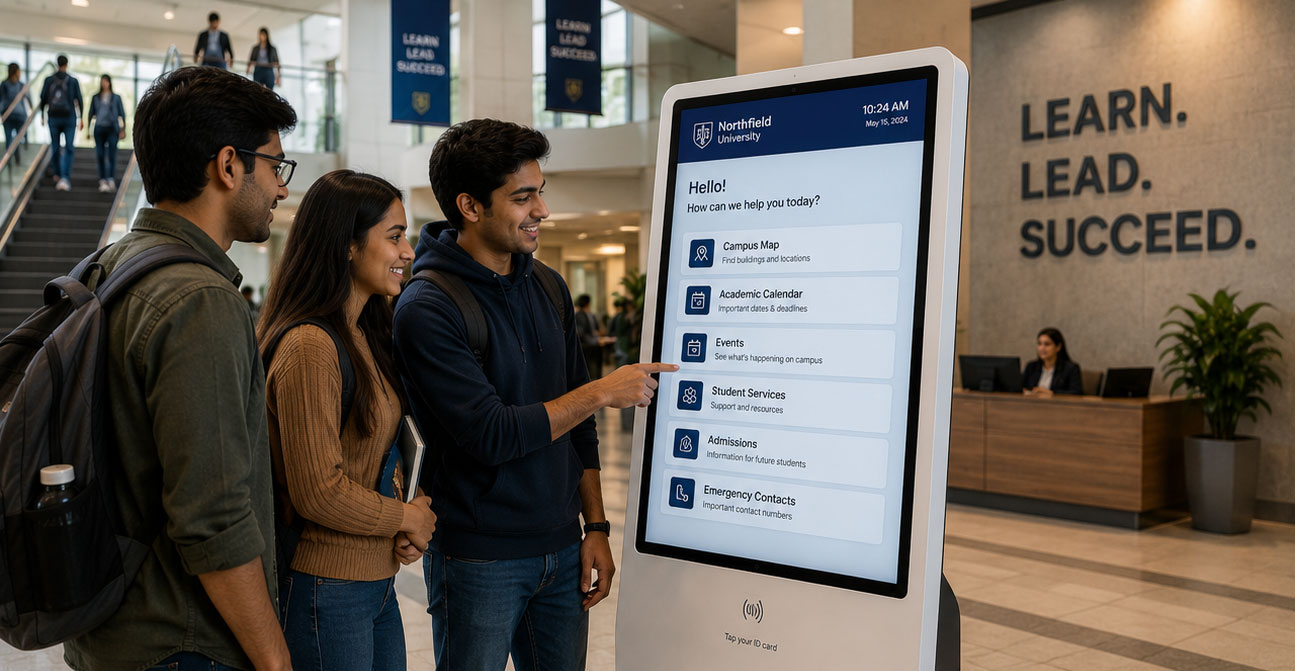
In education, kiosks act as student-centric digital assistants, placed across lobbies, canteens, libraries, and administrative blocks. They support:
- Student information access
- Fee payment and ERP integrations
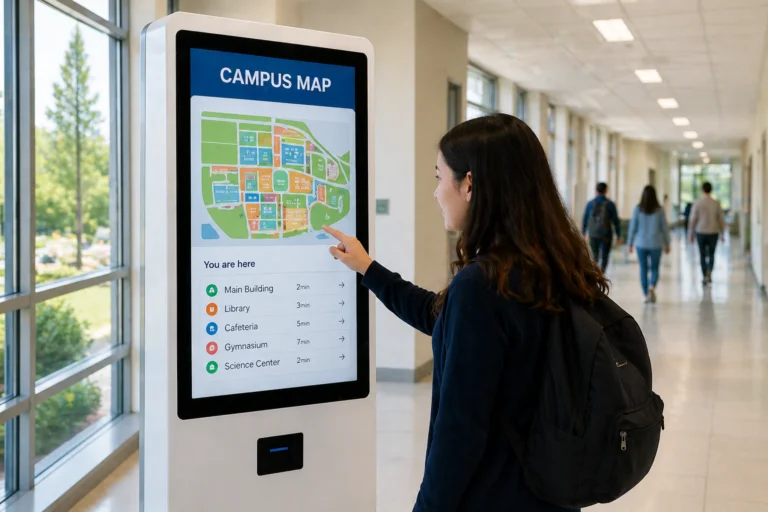
- Campus wayfinding and maps
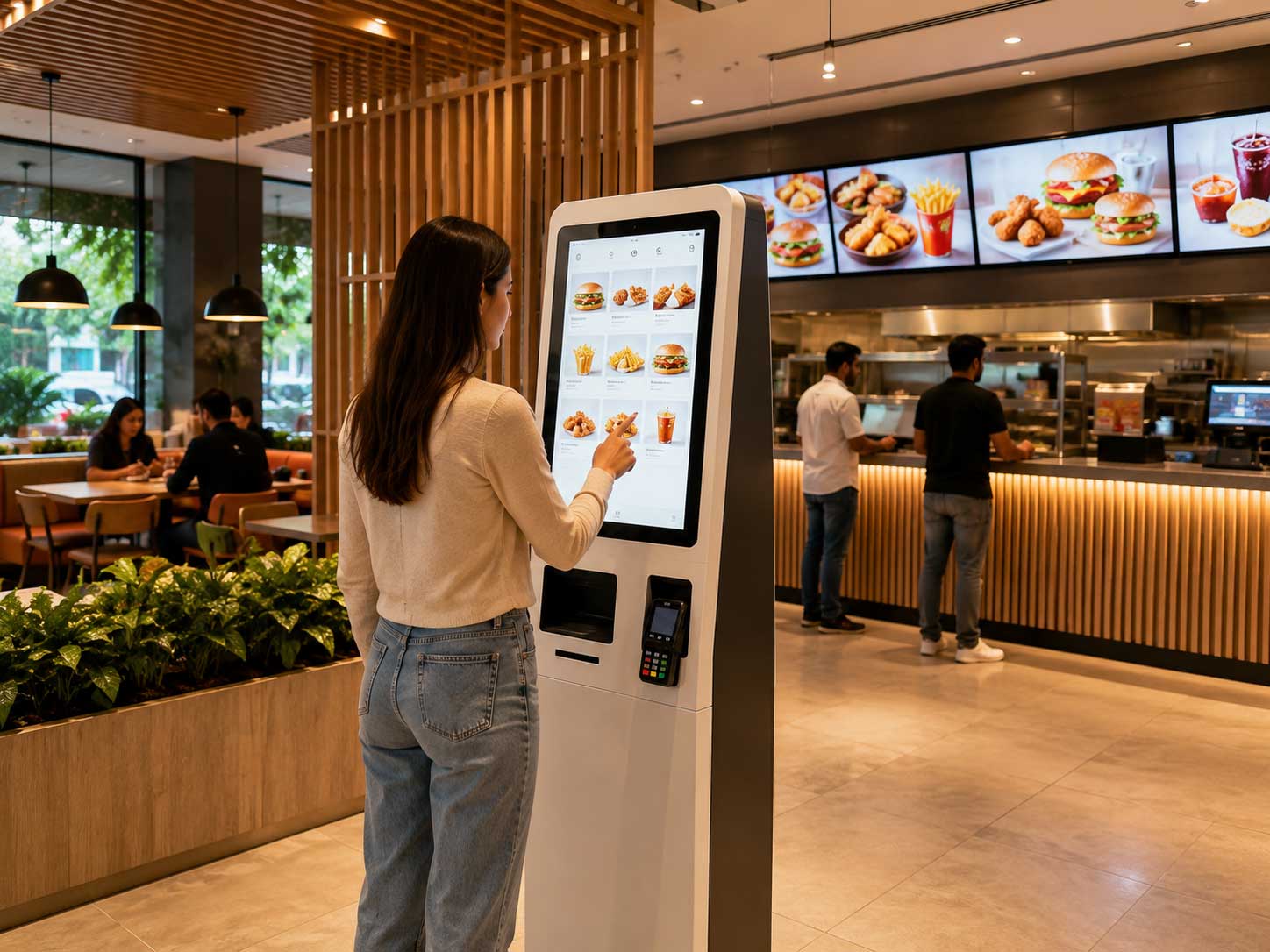
- Canteen self-ordering
- Event and conference registration
- Quick help and announcements
Why Educational Institutions Are Adopting Digital Kiosks
1. Self-Service and Efficiency
Kiosks eliminate queues at admin counters by allowing students to check timetables, pay fees, or print documents instantly.
2. Smart Wayfinding on Large Campuses
Universities with multiple departments and facilities can deploy interactive maps to guide students and visitors to the right building or lecture hall.
3. Cashless and Secure Fee Payments
Integrated payment gateways enable card or wallet transactions, reducing manual reconciliation and errors.
4. Canteen Management and Meal Orders
Self-ordering kiosks speed up service in cafeterias and track meal preferences for analytics on consumption trends.
5. Event Support and Registration
During open days, fests, or conferences, kiosks handle on-spot registration, ticketing, and real-time attendee verification.
6. Student Service Automation
Tasks such as requesting transcripts, reprinting ID cards, or updating details can all be handled through kiosk interfaces synced with the student ERP.
Key Benefits for Campuses
- Administration: Reduced workload, automated record-keeping, shorter queues
- Students: Faster access to information, 24/7 services, modern UX
- Finance: Instant digital receipts, secure transactions, reduced cash handling
- Communication: Real-time notices, emergency alerts, and campus news feeds
- Branding: Sleek, tech-savvy perception of the institution
Integration with Campus Systems
Modern kiosks connect seamlessly with existing technologies:
- Student Information Systems (SIS) for personal data and course schedules
- ERP Modules for finance and inventory tracking
- Payment Gateways for tuition and service fees
- Cloud CMS for updating content, event details, and announcements in real time
Case Scenario: Educational Kiosk Implementation
A Dubai-based university deployed ten self-service kiosks across campus. Within three months, the results were significant:
- 60% reduction in manual fee collection
- 40% decrease in foot traffic to admin counters
- Students reported higher satisfaction with faster processes
This showcases how technology enhances the overall campus experience without expanding administrative staff.
Future of Campus Kiosks
- AI Personalization: Student-specific dashboards showing class schedules, upcoming deadlines, or cafeteria balances
- Voice Interaction: Hands-free access for quick queries
- Biometric Verification: Faster authentication for exams or attendance
- Sustainability: Paperless workflows supporting green-campus initiatives
Conclusion
Digital kiosks are redefining how educational institutes operate — connecting students, staff, and visitors through one seamless digital interface. From wayfinding to payments, they create a modern, efficient, and inclusive campus ecosystem.