.svg)

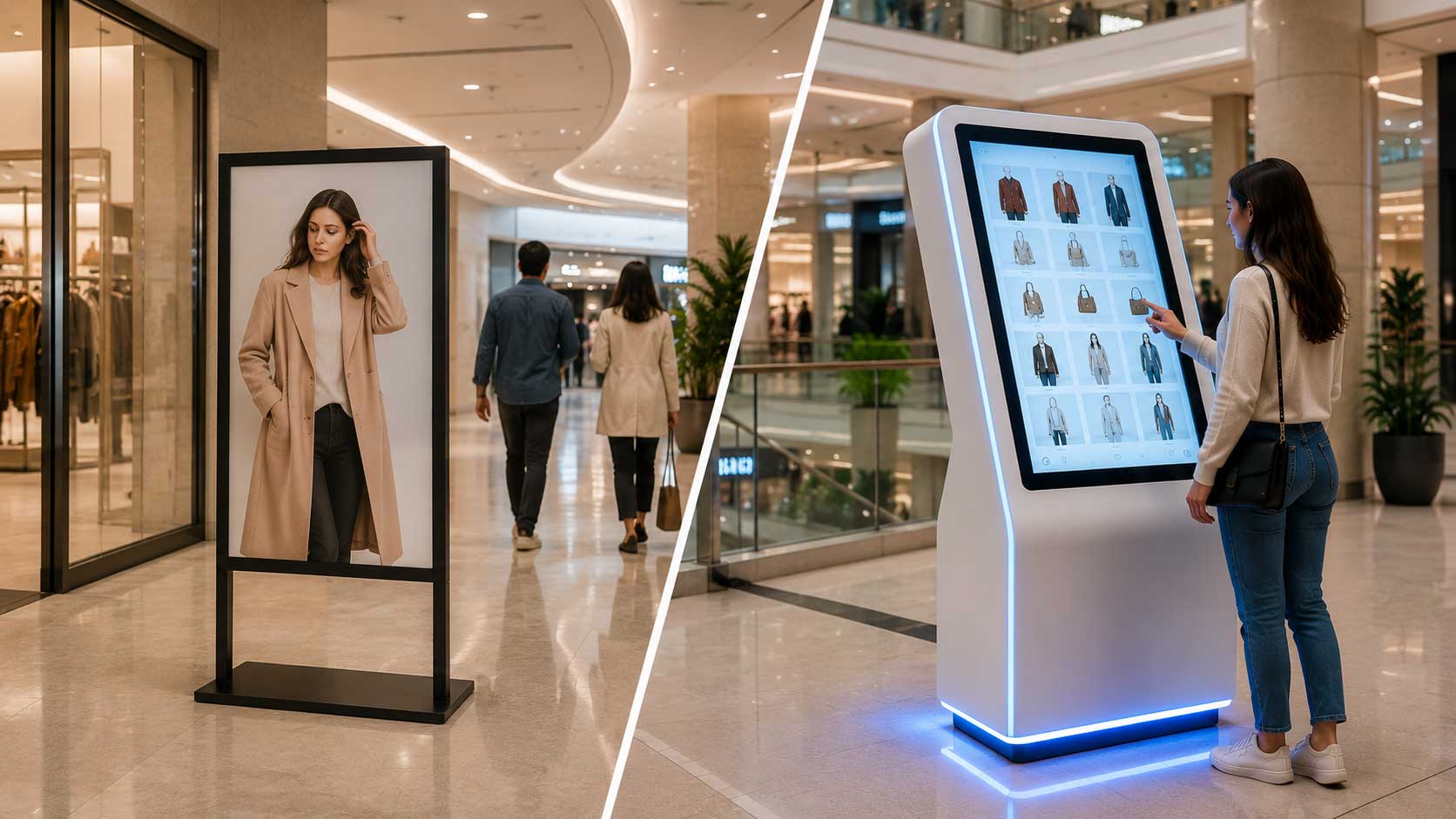
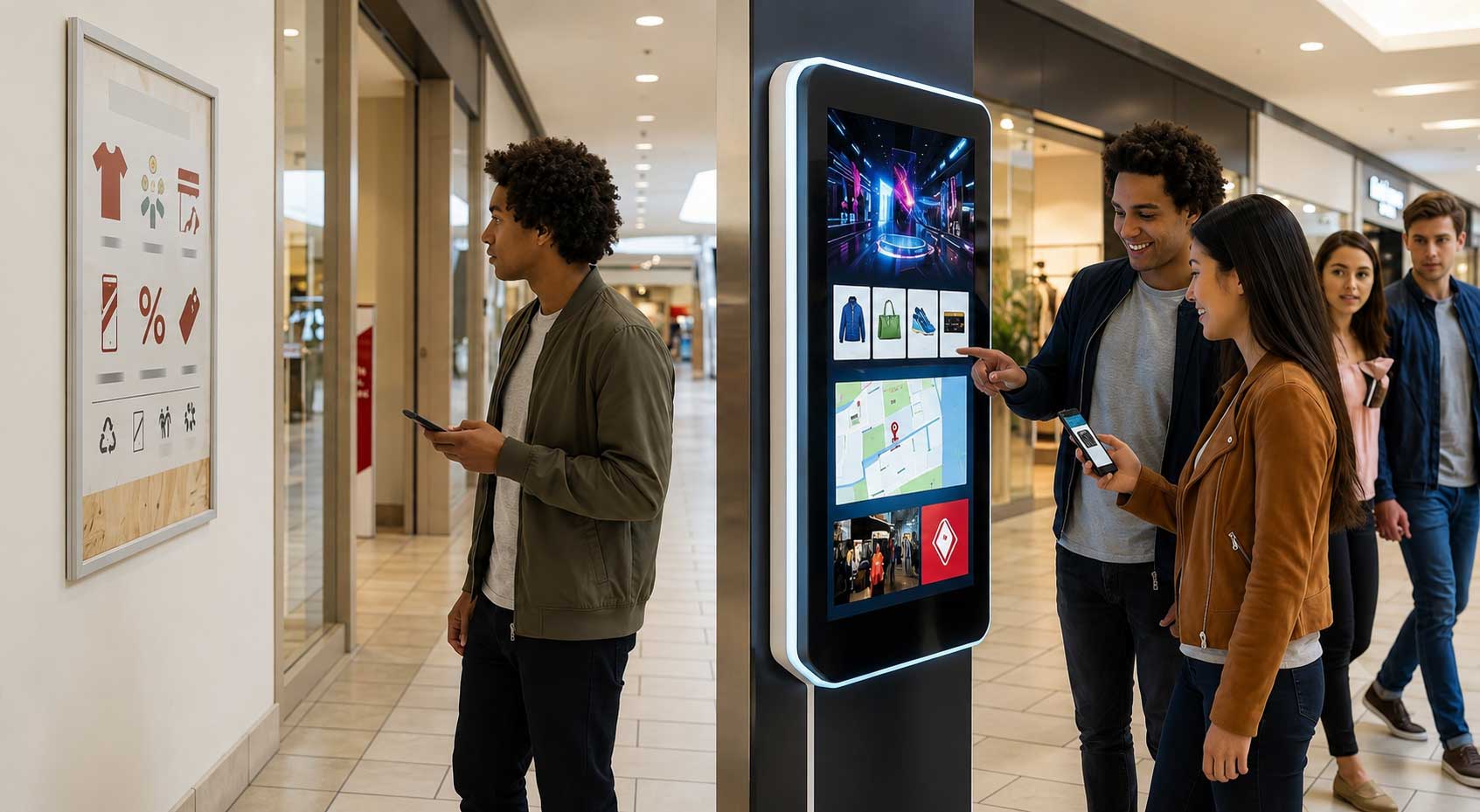
Businesses have relied on traditional signage for decades to communicate with customers, promote products, and guide visitors. Printed signs still have their place, but today's customers expect more than a static poster on a wall. They want to interact, explore, and get information on their own terms.
That's where the interactive kiosk comes in. By combining digital content, self-service functionality, and real-time information in a single platform, kiosks are changing the way businesses connect with their audiences. But how do they actually stack up against traditional signage? Let's break it down.
Static Information vs. Interactive Experiences
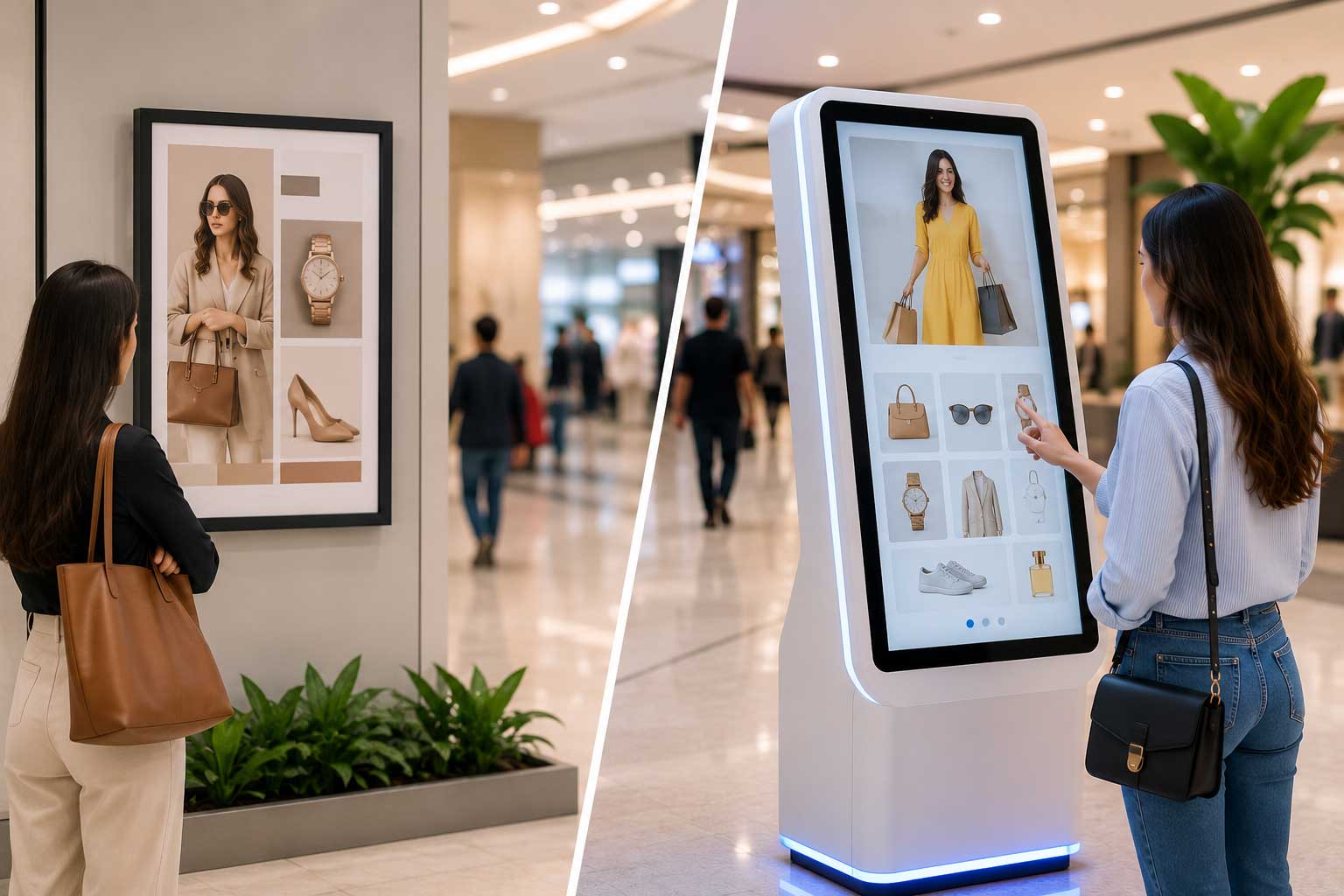
Traditional signs are built for one-way communication. Once they're up, they display the same message until someone physically replaces them.
An interactive kiosk works differently. Visitors can browse products, search directories, watch videos, complete forms, or pull up personalised information, all through an intuitive touchscreen interface. Instead of simply reading a sign, customers become active participants in the experience.
Content That Can Change Instantly
Updating printed signage means new designs, printing costs, and installation time. With a touchscreen kiosk, content can be updated instantly from a central system, with no physical replacements needed.
That kind of flexibility makes it easy to promote:
- Flash sales
- New products
- Upcoming events
- Business announcements
- Seasonal campaigns
- Limited-time offers
Businesses can even schedule different content throughout the day based on customer traffic and demand.
Better Customer Engagement
Interactive content naturally holds attention longer than a static display. When customers can actually do something at a kiosk, they tend to stick around and explore.
With an interactive display solution, customers can:
- Browse product catalogues
- Compare features side by side
- Watch demonstration videos
- Search for specific information
- Download brochures using QR codes
- Participate in surveys or promotions
These interactions create real opportunities to generate leads and gather customer insights that a printed sign simply can't provide.
Collecting Valuable Data
Traditional signage tells you almost nothing about how customers are responding to it. Interactive kiosks, on the other hand, can generate useful analytics including:
- Number of user interactions
- Most viewed content
- Popular products
- Frequently searched information
- Survey responses
- Lead submissions
That data gives businesses a clearer picture of what's working and helps them make smarter marketing decisions going forward.
Greater Flexibility Across Industries
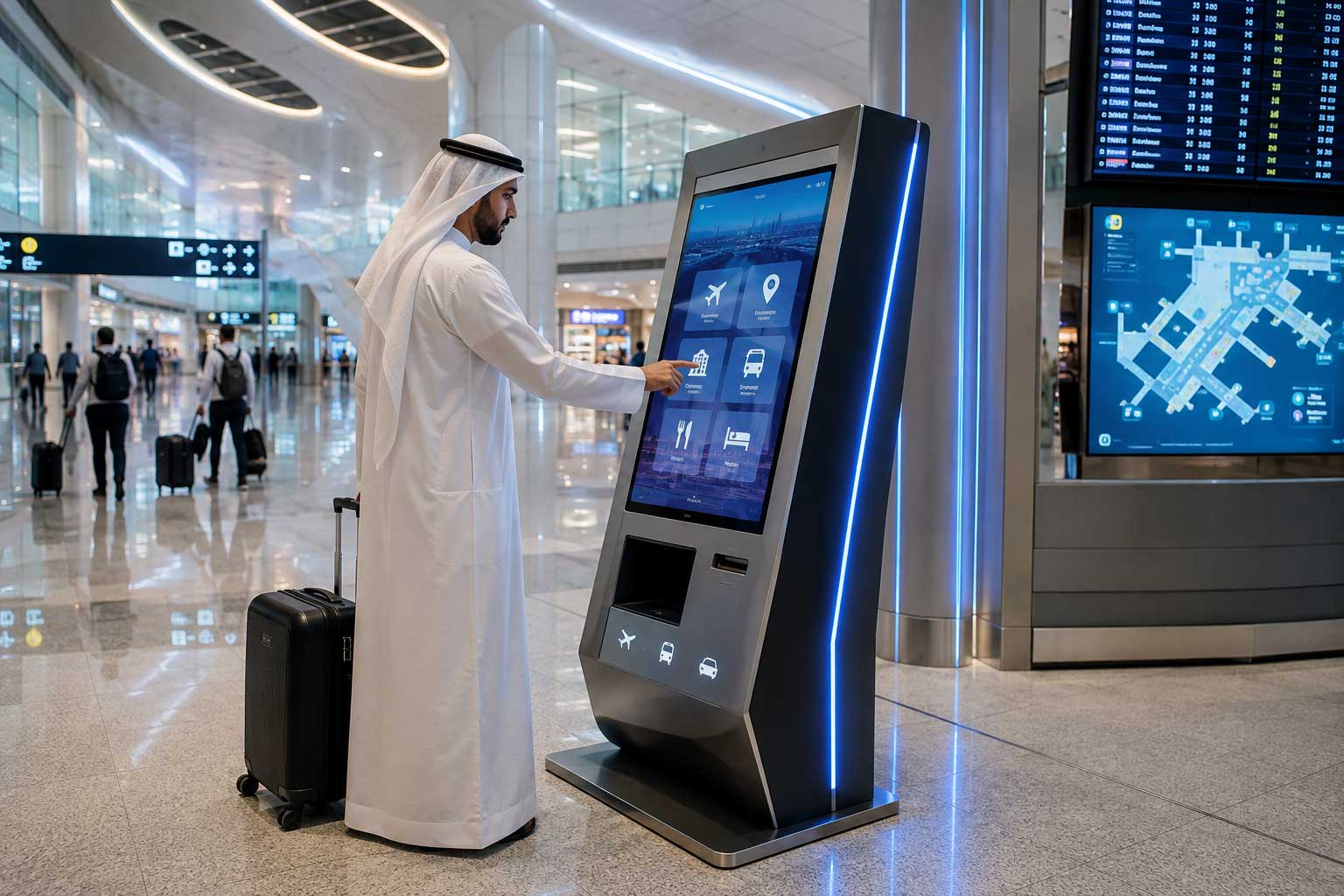
One of the strongest arguments for a retail kiosk in the UAE (or any other market) is how adaptable the technology is. Interactive kiosks can be configured for a wide range of applications, including:
- Retail product browsing
- Shopping mall directories
- Event registration
- Visitor management
- Healthcare check-in
- Education services
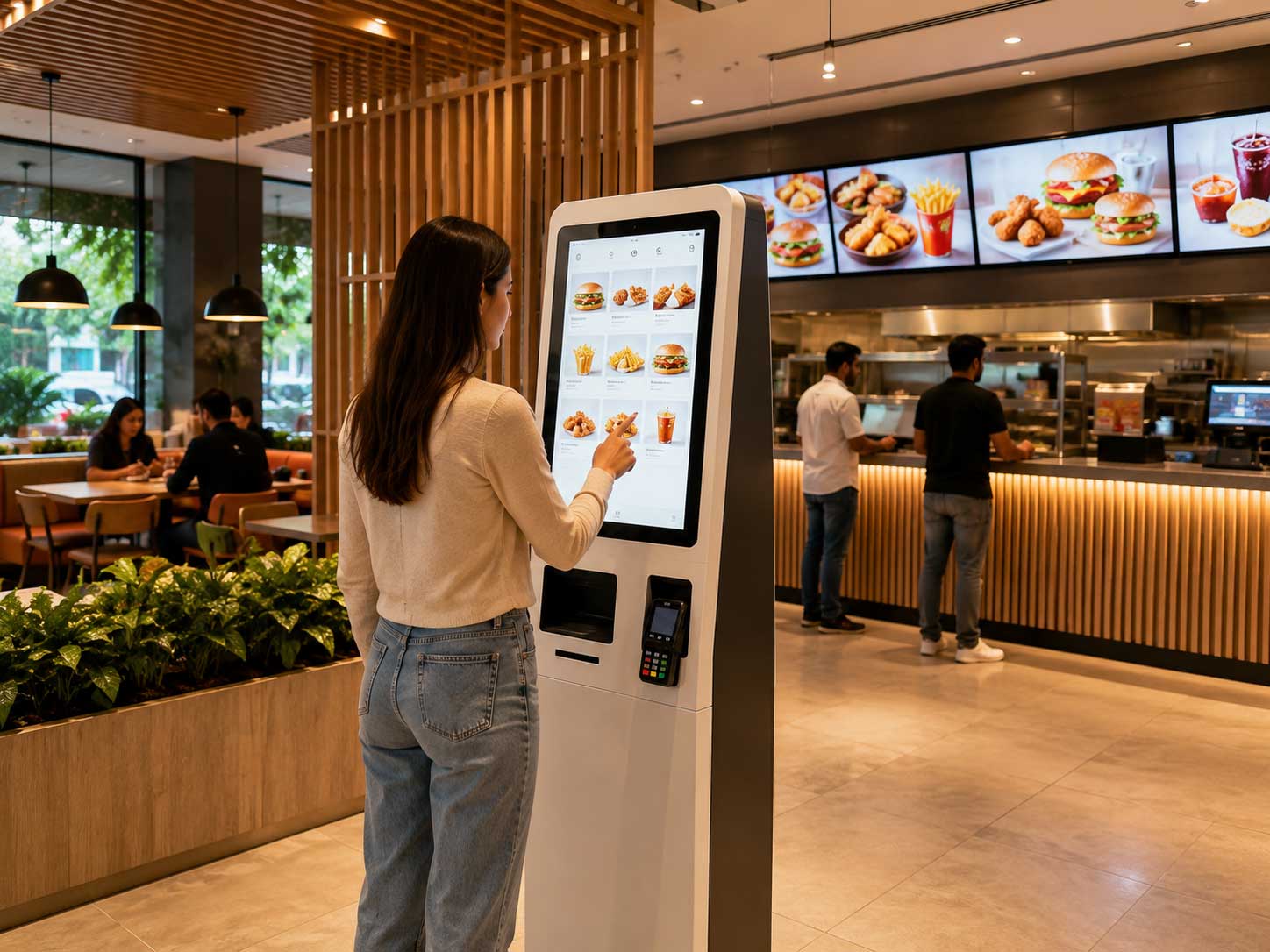
- Self-ordering solutions
That kind of versatility makes them a long-term investment rather than a single-purpose display tool.
Lower Long-Term Operating Costs
Interactive kiosks do require a higher upfront investment than printed signage. But over time, they can reduce ongoing costs considerably.
Businesses save on:
- Printing materials
- Installation costs
- Frequent graphic replacements
- Manual content updates
Because digital content can be refreshed instantly without replacing any physical materials, campaigns become more efficient and more environmentally friendly too.
Which Solution Is Right for Your Business?
Traditional signage still makes sense for permanent branding and simple directional information. It's cost-effective and easy to execute for straightforward messaging.
But if your goal is to improve customer engagement, deliver self-service experiences, or manage content dynamically, an interactive kiosk is the stronger option. For many businesses, the most practical approach is a combination of both: traditional signage for static branding, and interactive kiosks where customer interaction genuinely adds value.
Why Choose VirtuKiosk?
VirtuKiosk provides interactive kiosk solutions that help businesses move beyond static communication. Whether you're enhancing a retail store, shopping mall, educational institution, healthcare facility, or exhibition stand, VirtuKiosk's customisable kiosks deliver engaging digital experiences that improve customer satisfaction and operational efficiency.
Available for purchase or rental across the UAE, VirtuKiosk is designed to support businesses of all sizes, from single-location setups to multi-site deployments.
Frequently Asked Questions
Can interactive kiosks replace all traditional signage?
Not entirely. Traditional signage remains useful for permanent branding and simple directions, while interactive kiosks are ideal for customer engagement and self-service experiences.
Can kiosk content be updated remotely?
Yes. Content can be managed centrally and updated instantly across one or multiple kiosks, without any on-site intervention.
Are interactive kiosks suitable for different industries?
Absolutely. They're widely used in retail, education, healthcare, hospitality, shopping malls, exhibitions, and corporate environments across the UAE and beyond.