.svg)


Gone are the days when billing meant a calculator, handwritten receipts, and manual cash registers. In today's competitive marketplace, speed, accuracy, and customer experience define success — and a modern Point of Sale (POS) system delivers all three.
Whether you run a café, a boutique, a pharmacy, or a supermarket, a POS system is no longer a luxury — it's the digital backbone of your business.
What Is a POS System?
A Point of Sale system is the place where sales are made, transactions are processed, and business data is captured.
But the modern POS goes beyond billing — it integrates inventory, customer relationship management, analytics, and payments into one platform.
Core Components
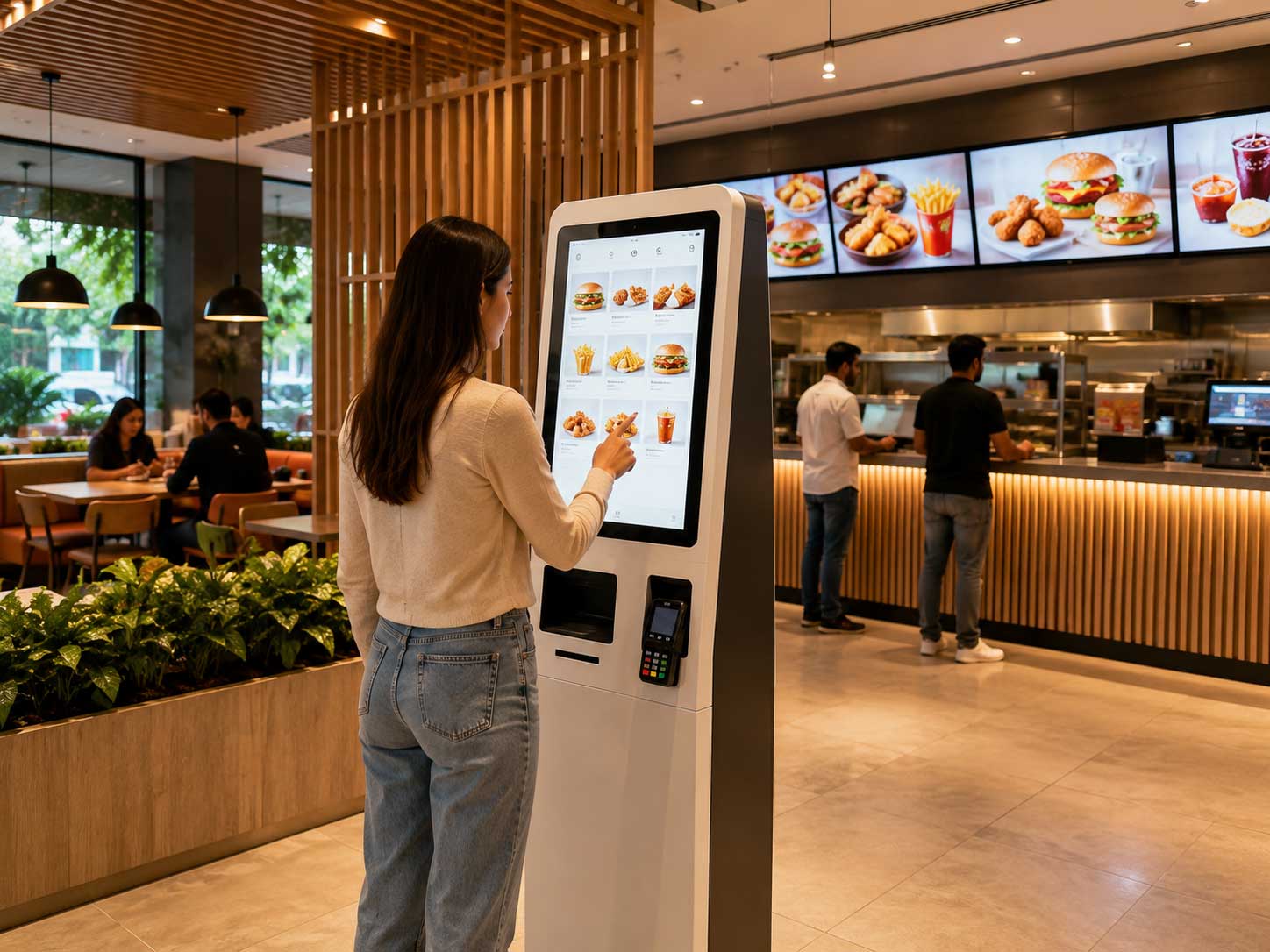
- Hardware: POS terminal, barcode scanner, receipt printer, cash drawer, and card reader.
- Software: The cloud-based system that handles transactions, manages inventory, and stores business data.
Key Functions of a Modern POS System
- Faster & Accurate Billing — Automated billing ensures quick checkout and eliminates human error — critical during peak hours.
- Inventory Management — Track stock in real-time, receive low-stock alerts, and generate automatic purchase orders.
- Customer Relationship Management (CRM) — POS systems capture customer data, enabling personalized promotions and loyalty programs.
- Employee Management — Monitor shift timings, sales performance, and commissions — all in one dashboard.
- Reporting & Business Analytics — POS dashboards visualize sales trends, top-performing products, and profit margins — turning raw data into actionable insights.
- Multi-Store Integration — Cloud POS solutions allow centralized control for businesses with multiple outlets or franchise models.
Benefits of Using a POS System
- Speed & Accuracy: Faster billing, shorter queues, reduced human errors.
- Real-Time Insights: Data-driven decision-making.
- Customer Loyalty: Personalized offers and better service.
- Inventory Control: Prevents overstocking or shortages.
- Mobility: Cloud access from any location.
- Scalability: Easy to add new stores, users, or devices.
Why Businesses in the UAE Need a POS System
- Tax Compliance: Simplifies VAT-ready invoicing and reporting.
- Cloud Adoption: Growing shift toward mobile and cloud POS for remote management.
- Consumer Expectations: Fast, paperless, and digital-first experiences have become standard.
How POS Systems Improve the Customer Experience
- Speed: Quick checkouts and shorter queues.
- Personalization: Access to purchase history for targeted deals.
- Transparency: Digital invoices and flexible payment options.
- Engagement: Loyalty programs, gift cards, and customer feedback integration.
Future Trends in POS Technology
- AI & Predictive Analytics: Forecasting demand and automating restocks.
- Integrated E-commerce POS: Unified online + offline inventory.
- Contactless & QR Payments: Safer and faster checkout methods.
- Mobile POS Devices: Flexibility for on-the-go sales.
Choosing the Right POS for Your Business
When selecting a POS solution, consider:
- Industry Fit: Restaurant POS differs from retail or salon systems.
- Ease of Use: Intuitive UI and minimal training required.
- Support & Updates: Regular software upgrades and technical support.
- Integration: Compatibility with aggregators, accounting, CRM, and inventory tools.
- Pricing Model: Subscription vs. one-time cost, depending on business size.
Conclusion
A modern POS system is more than a billing tool — it's the central nervous system of any business. It streamlines daily operations, enhances customer experiences, and empowers data-driven growth.
In an era where speed and intelligence drive profitability, a POS system is not just an upgrade — it's an investment in efficiency and scalability.
Modernize your business with Castle IT's POS solutions. From billing automation to cloud analytics, we help businesses of every size achieve smarter, faster operations.